
If you think you have a slab leak, do a meter test first. Turn off every tap, then watch your water meter. If it still moves, water is escaping somewhere. Shut off the main valve, move rugs and furniture off damp spots, call your insurer, and book a licensed plumber to check it.
A slab leak is a leak in a water pipe that runs under or through the concrete floor of your home. It is one of the more stressful problems a homeowner can face, because you cannot see it. This guide walks you through the signs, the first steps, and your repair choices.
Why Slab Leaks Matter in Tampa Bay
Most Tampa Bay homes sit on a concrete slab, with no basement. In many of those homes, the water pipes run under the slab or inside it. When one of those pipes fails, the water has nowhere to go but into the soil, the concrete and your floors.
A small leak can run for weeks before you notice it. In that time it can soak flooring, feed mold and wash away soil under the slab. The longer it runs, the more it costs to fix the damage around it. That is why acting on early signs matters so much.
Why pipes under the slab fail
- Copper pipe can wear thin where it rubs against concrete
- Older pipes corrode with age and wet ground
- Shifting soil can stress pipes and fittings
- Poor original installs can fail years later
Homes that see it more often
Town 'n' Country has many 1960s to 1970s ranch homes on slabs. Older Tampa neighborhoods, like Seminole Heights and Tampa Heights, have many early 1900s homes. Many Florida homes built from about 1978 to 1995 used polybutylene, a grey plastic supply pipe that often fails with age. Any of these can raise the odds of a leak under the floor.
Signs You May Have a Slab Leak
Slab leaks rarely announce themselves with a puddle. Instead, they show up as small changes you might brush off. If you notice two or more of these signs, it is time to look closer.
Signs inside the house
- A warm spot on the floor
- Running water sounds with every tap off
- Damp carpet or swollen wood floors
- New cracks in tile or walls
- A musty smell near the walls
Signs on your bills and fixtures
Your water bill is often the first clue. A sudden jump, with no change in how you use water, points to a hidden leak. Low water pressure can be another sign, since water is leaking out before it reaches your taps.
A warm spot means a hot water line is leaking. Hot water lines can also make your water heater run more than usual. If your heater seems to run all the time, mention it when you call.
What it might be instead
Not every wet floor is a slab leak. A leak in a wall, under a sink or at a toilet can look similar. A leak in the buried line from the meter to the house can raise your bill, too.
That is why finding the source comes first. Our leak detection team handles leaks in walls and ceilings, and our water line repair team handles the buried main.
What to Do Right Now
These steps help you confirm the leak and limit the damage while you wait for a plumber. None of them need special tools.
Step 1: Do the meter test
- Turn off every faucet, shower and appliance that uses water.
- Make sure the toilets are not refilling.
- Find your water meter, usually in a box near the street.
- Note the reading, or watch the small leak dial.
- Wait 30 minutes without using any water.
- Check again. If the numbers moved, you likely have a leak.
Step 2: Shut off the main water valve
Your main shut-off valve is often near where the water line enters the house. In many slab homes it is in the garage or on an outside wall. Turn it clockwise until it stops. If you cannot find it or it will not turn, the utility can shut off water at the meter.
Step 3: Protect your floors and things
- Move rugs, furniture and boxes off damp areas
- Run fans to help dry wet spots
- Take photos of any damage
- Turn off the water heater if hot water is off
Step 4: Call your insurer, then call us
Call your home insurance company and ask how they handle slab leaks. Then call a licensed plumber to check it. You can call us any time. A live person answers 24 hours a day and books the soonest available appointment, with same-day appointments when the schedule allows.
How a Slab Leak Is Found
You do not want anyone breaking up your floor on a guess. The goal is to find the leak to within a small area first, so only a small section of floor is opened, if any.
The tools of the trade
Finding the exact spot under concrete takes special tools. A leak detection specialist may test each line under pressure, to learn whether it is the hot side or the cold side. Then they listen for the leak with an acoustic tool, a sensitive microphone that picks up the hiss of water through concrete. Some leaks also show up as heat on a thermal camera. We don't do this step ourselves. When it is needed, we refer you to a trusted specialist.
What to expect at the visit
Your technician walks the home, checks the meter and asks what you have noticed. If a slab leak looks likely, we refer you to a trusted leak detection specialist to find the exact spot. Once it is marked, your technician gives you three options (repair, replace or prevent) before any work.
We price by the job, not by the hour. You approve the price before any work starts, and it won't change. Every service call also comes with a free plumbing safety inspection, so you learn about other problems before they become leaks.
Why accuracy matters
A good locate saves you money. Every square foot of floor that does not get opened is flooring you do not need to replace. It also means less dust, less noise and a shorter repair. You can read more about the visit on our slab leak repair in Tampa page.
Your Repair Options: Spot Repair, Reroute or Repipe
Once the leak is found, there are three main ways to fix it. The right choice depends on where the leak is, the age of your pipes and how many leaks you have had.
| Option | Method | Fits when |
|---|---|---|
| Spot repair | Open slab, fix pipe | One leak, sound pipe |
| Reroute | New line above slab | Leak hard to reach |
| Repipe | Replace all supply lines | Many leaks, old pipe |
Spot repair through the slab
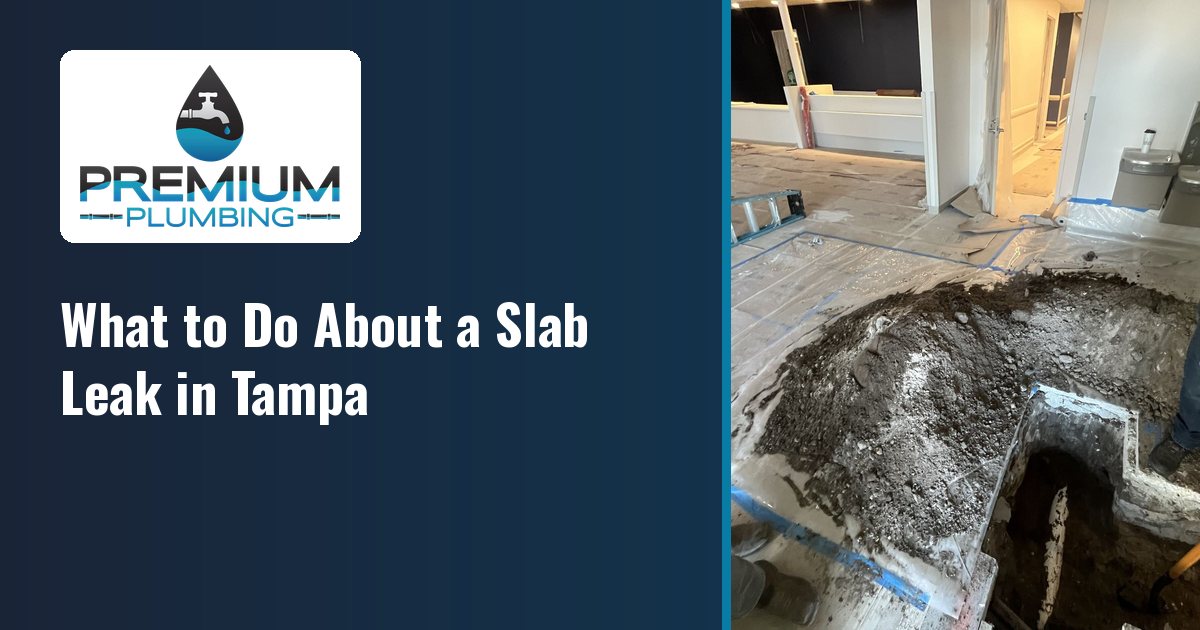
The crew cuts a small opening in the floor, digs down to the pipe, fixes the leak and fills the hole. Our photos show technicians digging through a concrete slab inside a home, which is what this looks like. It works well when the rest of your pipe is in good shape.
Rerouting the line
Rather than dig, the plumber runs a new pipe through the walls or attic and caps off the old one. This often means less damage to floors. It can make sense when the leak sits under cabinets, tile you love, or a spot that is hard to reach.
When repiping makes more sense
If this is your second or third leak, or your home has polybutylene or aging copper, more leaks may follow. In that case, whole-home repiping can cost less over time than fixing one leak after another. Many slab homes are repiped through the walls and attic, so the slab stays closed.
What Affects the Cost of Slab Leak Repair
We do not post prices online, because every leak is different. Here is what drives the price, so you know what to expect.
Main cost factors
- Where the leak sits under the slab
- Spot repair, reroute or repipe
- Type of flooring that must be lifted
- How deep the pipe runs
- Floor patching after the repair
Repair work is priced at the visit, after the leak is found. We give free quotes on installations and replacements, such as a whole-home repipe. Financing is available, subject to credit approval. You can also ask about current coupons when you call.
Insurance basics
Many home policies treat the pipe and the water damage differently. Some help with the cost of opening and closing the floor, or with damage to your home. The pipe repair itself may not be covered. Every policy is different, so check your policy and talk to your insurer before work starts.
Keep your photos, the plumber's findings and your bills. Your insurer may ask for them. We can explain what we found so you can share it with your adjuster.
Watch out for these
Be careful with a quote that skips the locate step. Breaking up a floor without a clear target can cost far more in the end. Ask what the price includes, and whether floor patching is part of it. New products carry the manufacturer's warranty, and we explain it at the visit.
When to Call a Pro vs Doing It Yourself
There is a lot you can do on your own to limit damage. The repair itself is another story.
Things you can do yourself
- Run the meter test
- Shut off the main valve
- Move and dry what you can
- Take photos and call your insurer
Why the repair needs a licensed plumber
A slab leak repair means cutting concrete, working on pressurized lines and testing the system after. A poor joint under concrete can fail again, and next time it is even harder to reach. Many repiping jobs also need a permit, so check with City of Tampa Construction Services or your local building office.
Licensed and insured. Florida Certified Plumbing Contractor CFC1429217. Owner Brad Pinkert, a master plumber, has worked in the trade since 2002. 100% Satisfaction Guarantee: if something isn't right, we send a technician back to make it right.
When it is an emergency
If water is pooling, a ceiling or wall is wet, or you cannot shut off the water, treat it as an emergency. See our emergency plumbing page for what to do next.
Need a Plumber in Tampa? Premium Plumbing Is Ready to Help
A slab leak gets worse the longer it runs, so do the meter test and shut off the main if it moves. We are locally owned and operated in Tampa, working from our shop on Thatcher Avenue. A live person answers 24 hours a day and books the soonest available appointment. Call (813) 773-6486 or contact us to book.