
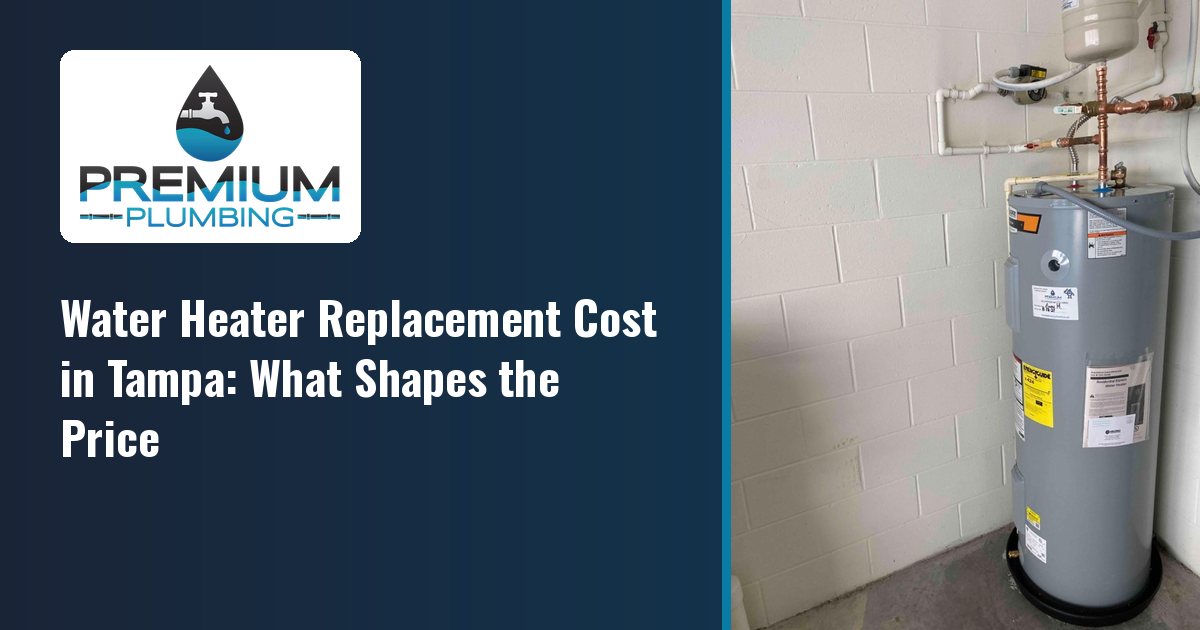
Water heater replacement cost in Tampa depends on the tank size, gas or electric, where the heater sits and any code updates the new install needs. Haul-away and hard water play a part too. We give free quotes on installations and replacements, and the flat price you approve before work starts won't change.
Why This Matters Before You Replace
Most people shop for a water heater on the worst day. The old tank is leaking, or the shower ran cold this morning. That is a hard time to compare quotes. Knowing what drives the price ahead of time helps you ask the right questions and spot a quote that leaves things out.
A water heater is also one of the hardest working appliances in your home. It heats water for showers, laundry and dishes every day. The right size and setup can serve your family for years. The wrong one can run short on hot water or wear out early.
Two quotes for "a new water heater" can cover very different jobs. The questions below help you compare them on the same terms.
Tampa adds its own twists. Hard water is common across much of Tampa Bay, and scale can shorten a heater's life. Many homes have the heater in a garage, a closet or an attic. Each spot changes how much work the swap takes, so it is worth knowing where yours stands.
What Drives the Price of a New Tank Water Heater
No two installs are quite the same. These are the factors that move the price most often in Tampa homes. Your quote should account for each one, so ask about any that are missing.
Tank Size
Tank water heaters come in different sizes, measured in gallons. A bigger tank costs more and may need more space. The right size depends on how many people live in your home, how many bathrooms you have and how much hot water you use at once.
Gas or Electric
Many homes in Tampa Bay are all-electric. Others use natural gas, and some use propane. Swapping like for like is usually simpler. Switching from electric to gas means a new gas line and venting, which adds to the job. Our gas line services page covers that work.
Where the Heater Sits
A heater in an open garage is usually the simplest to reach. A tight closet, an attic or a spot behind other equipment takes more time and care. Attic installs may also need extra steps to protect the ceiling below if the tank ever leaks.
Code Updates
Codes change over time, so a new install may need parts the old one did not have. For example, an expansion tank or a drain pan may be required. Check with your permit authority. Inside city limits, that is City of Tampa Construction Services. Many plumbing jobs, such as water heater replacement, need a permit.
Haul-Away of the Old Tank
The old tank has to go somewhere. Draining it, disconnecting it and hauling it out takes time. Ask if haul-away is part of the price. A quote that leaves it out can look lower than it really is.
Hard Water and Sizing
Hard water leaves scale inside the tank. Over time, that scale can cut how much hot water you get and shorten the heater's life. Check your utility's annual water quality report to learn more about your water. Some homeowners pair a new heater with our water softeners to help protect it.
Sizing matters here too. A tank that is too small runs out of hot water, and you may end up replacing it early. A tank that is too big heats water you never use. Your technician can help you match the size to your household, not just to the old tank.
How Each Factor Shifts the Price
| Factor | What it means | Effect on price |
|---|---|---|
| Size | Gallons the tank holds. | Bigger tanks cost more. Ask what fits. |
| Fuel | Gas, electric or propane. | Switching fuel adds work. Like for like is simpler. |
| Location | Garage, closet or attic. | Tight spots take longer. Attics need extra care. |
| Code parts | Expansion tank or drain pan. | May be required. Check with your permit authority. |
| Haul-away | Removing the old tank. | Adds time. Ask if it is included. |
| Water quality | Hard water and scale. | Can shorten tank life. A softener may help. |
Watch for these gaps when you compare quotes:
- Haul-away. Is removal of the old tank part of the price?
- Code parts. Does the quote cover an expansion tank or drain pan if needed?
- Permit. Does it say who checks permit needs?
- Fittings. Are new valves and connectors included?
Tank or Tankless?
A tank heater keeps a store of hot water ready. A tankless heater heats water only when you open a tap. Both can work well in Tampa homes. The right pick depends on how you use hot water, your space and your budget.
When a Tank Makes Sense
A tank is often the simpler and lower cost swap. If your current tank has served you well and you like how it works, a like-for-like replacement is usually the easiest path. It fits the space and hookups you already have.
When Tankless Is Worth a Look
Tankless units are smaller and can mount on a wall, inside or out. You can see an example in our photos: a Rinnai tankless unit on an exterior wall. Converting from a tank usually takes more work up front. Our tankless water heaters page explains the switch.
Here are a few questions to ask yourself before you choose:
- Space. Do you need the floor space a tank takes up?
- Use. Do you often run out of hot water with back-to-back showers?
- Timing. Do you need hot water back as soon as possible?
- Budget. Do you want the lower upfront cost of a tank?
Repair or Replace Your Water Heater?
Not every problem means a new heater. Your technician gives you three options (repair, replace or prevent) before any work. A failed part, like a heating element or thermostat, can often be fixed. A tank that leaks from its body usually cannot. Our water heater repair page covers the common fixes.
Signs a Repair May Be Enough
- No hot water. An electric heater may have a failed element or thermostat.
- Pilot problems. A gas heater may need a part at the burner.
- Lukewarm water. A part may be worn while the tank is still sound.
Signs It Is Time to Replace
- Leaking tank. Water pools under the tank itself, not just the fittings.
- Rusty hot water. Brown water only on the hot side can mean a rusting tank.
- Rumbling. Loud pops and bangs can point to heavy scale inside.
- Age. The heater is old and has needed several repairs.
- Short supply. Your family has outgrown the tank size.
If you are not sure, ask for both prices on the same visit. Then weigh the cost of a fix against how much life the tank has left. You choose, and nothing starts until you approve the price.
How Our Flat-Rate Quote Works
We price by the job, not by the hour. You approve the price before any work starts, and it won't change. That means no clock running while we work and no surprise at the end. Here is how a replacement usually goes:
- Look at your setup. We check the size, fuel, location and hookups of your current heater.
- Talk through options. You hear about size, tank or tankless, and any code parts that may apply.
- Get your price. Free quotes on installations and replacements. You approve the price before work starts.
- Install the new heater. We swap the old tank for the new one and connect it.
- Test and walk through. We check for leaks, test the hot water and show you the controls.
Warranty, Coupons and Financing
New products carry the manufacturer's warranty, and we explain it at the visit. Coupons change monthly, so ask about current coupons when you call. Financing available, subject to credit approval. We take Visa, Mastercard, American Express and Discover.
Membership Perks for Your Heater
Our membership plan is built to help your heater last. Ask about the plan when you call. Members get:
- An annual tank water heater flush to clear out sediment.
- 10% off plumbing services.
- Priority booking.
- Free diagnosis.
- An annual whole-home safety inspection.
When to Call a Pro vs DIY
Some checks are safe to do yourself before you call. They can save you a visit or help your plumber know what to expect. Always follow the label on your heater and turn off power or gas before you touch anything near it.
- Breaker. On an electric heater, check if the breaker has tripped.
- Thermostat. Make sure the temperature setting has not been turned down.
- Leaks. Look around the base and the pipes on top for drips.
- Flushing. Draining sediment is a common upkeep step. Follow your heater's manual.
Call a licensed plumber for these:
- Gas smell. Leave the home and call your gas utility from outside.
- Leaking tank. Turn off the water to the heater and call us.
- Replacement. A new heater is licensed work and may need a permit.
- Fuel change. Moving from electric to gas needs a gas line and venting.
We are licensed and insured. Florida Certified Plumbing Contractor CFC1429217. Owner Brad Pinkert, a master plumber, has worked in the trade since 2002. You also get a free plumbing safety inspection with every service call.
100% Satisfaction Guarantee: if something isn't right, we send a technician back to make it right. Learn more about water heater installation in Tampa or see our water heater installation page for the full service.
Need a Plumber in Tampa? Premium Plumbing Is Ready to Help
If your water heater is failing or you want to plan ahead, we can look at your setup and give you a flat-rate price before work starts. A live person answers 24 hours a day and books the soonest available appointment. Call (813) 773-6486 or contact us for free quotes on installations and replacements.